RSS

GTA Buyer Guide 2026

Your Complete Home Buying Roadmap for Toronto & the Greater Toronto Area

Buying a home in the Greater Toronto Area in 2026 is very different from buying just a few years ago. Interest rates, affordability rules, government incentives, and neighborhood-level pricing all play a role in how successful your purchase will be.

The GTA Buyer Guide 2026 is designed to give buyers clarity, structure, and confidence—whether you are purchasing your first home, upgrading, or entering the market as a newcomer to Canada.

Why Buy in the GTA in 2026?

Despite market cycles, the GTA remains one of Canada’s strongest real estate markets. Population growth, immigration, employment diversity, and limited housing supply continue to support long-term housing demand.

Toronto and surrounding cities such as Mississauga, Brampton, Vaughan, Markham, Pickering, Milton, and Ajax all behave differently. Understanding where and how to buy matters more than timing the market.

Step 1 – Is Buying Right for You?

Homeownership comes with responsibilities beyond the purchase price. Buyers must evaluate lifestyle readiness, upfront costs, monthly expenses, and long-term maintenance obligations before making a decision.

Step 2 – Financial Readiness

Lenders evaluate buyers using strict affordability rules. Down payments, credit history, debt ratios, and income stability all determine how much you can borrow. Planning early prevents costly surprises later.

Step 3 – Mortgage Education

Understanding fixed versus variable rates, mortgage terms, amortization, stress tests, and CMHC insurance is critical. A strong mortgage strategy can save tens of thousands of dollars over time.

Step 4 – Finding the Right Home

Condos, freeholds, townhomes, and new construction all serve different buyer needs. Location, maintenance responsibilities, fees, and resale potential should guide your decision—not emotion alone.

Step 5 – Making an Offer & Closing

A successful offer includes the right price, deposit, conditions, and closing timeline. Buyers must also plan for closing costs such as land transfer tax, legal fees, and adjustments.

Government Incentives (2026)

Many buyers qualify for federal and provincial programs such as:

  • First-Time Home Buyer Incentives

  • RRSP Home Buyers’ Plan

  • Land Transfer Tax Rebates

Understanding these programs can significantly reduce upfront costs.

After You Buy

Owning a home means planning for maintenance, budgeting for repairs, reviewing insurance regularly, and protecting your long-term investment.

Next Steps

Buying a home is not just a transaction—it’s a strategy.

If you are planning to buy in Toronto or the GTA in 2026, the smartest next step is a personalized buyer consultation.

Sami Chowdhury
Broker, RE/MAX Realtron Realty Inc.
📧 samichy@torontobase.com
📞 647-725-0606
🌐 torontobased.com | torontobase.ca


Read

The Rise of the New England Patriots: From AFL Roots to NFL Legends

🏈 New England Patriots: A Legendary NFL Franchise

The New England Patriots are one of the most successful and storied franchises in the history of the National Football League (NFL). Founded in 1959 as the Boston Patriots, they were an original member of the American Football League (AFL) before joining the NFL in the AFL–NFL merger in 1970. The team relocated to Foxborough, Massachusetts, in 1971 and soon became one of the most recognized names in professional sports. (Wikipedia)


🔥 From Humble Beginnings to NFL Powerhouse

The Patriots started in the AFL as the Boston Patriots, playing in various venues around Boston before making Foxborough their home. After the AFL–NFL merger, the Patriots slowly built their identity in the league, with early playoff appearances and solid competitive seasons. (Kiddle)

It wasn’t until the mid-1990s, however, that the Patriots began their meteoric rise to prominence.


🏆 The Kraft Era & Patriots Dynasty

In 1994, Robert Kraft purchased the Patriots, transforming the franchise into a powerhouse. Under his ownership, the Patriots became known for their disciplined culture, smart team building, and playoff prowess. (A Family of Businesses | The Kraft Group)

From 2001 to 2019, the Patriots established one of the most dominant runs in NFL history. With Bill Belichick as head coach and Tom Brady at quarterback, New England made frequent playoff runs and became a dynasty. (New England Patriots)


🏆 Super Bowl Success

The Patriots are tied for the most Super Bowl championships in NFL history with six Lombardi Trophies. These titles came in 2002, 2004, 2005, 2015, 2017, and 2019, all achieved under the Belichick–Brady era. (Encyclopedia Britannica)

Over the years, the franchise has also appeared in a record 12 Super Bowls, making New England one of the most consistent contenders on the league’s biggest stage. (Pro Football Reference)


🏈 The 2025 Season & New Era in New England

The 2025 season marked an exciting new chapter for the Patriots. Under head coach Mike Vrabel, New England posted a 14-3 record, won the AFC East, and captured the conference title with a gritty 10-7 win over the Denver Broncos in snowy Denver. This victory propelled the Patriots into Super Bowl LX, their 12th appearance in franchise history. (Wikipedia)

Second-year quarterback Drake Maye emerged as a key figure, playing a major role in the team’s performance and narrowly missing the league MVP award in the closest voting race in years. (Pats Pulpit)

The 2025 Patriots also made history by becoming the first team ever to reach the Super Bowl after losing 13 games the previous season, highlighting one of the greatest turnarounds in NFL history. (SB Nation)


🌟 Legacy & Impact

The Patriots’ success has had a massive impact on the NFL and American sports culture. Their sustained winning, strategic drafting, and tendency to reinvent the roster year after year have made New England a model of consistency. They also boast one of the largest and most passionate fan bases in football. (New England Patriots)

Even off the field, the Patriots franchise has grown into a multi-billion-dollar business, becoming one of the most valuable teams in professional sports. (Reuters)


💬 Final Thoughts

Whether you’re a die-hard fan or a neutral observer, the New England Patriots are undeniably one of the most fascinating teams in sports history. With decades of dominance, thrilling comebacks, legendary players, and now a new generation of talent, the Patriots continue to shape the NFL narrative — and their journey is far from over.


Sami Chowdhury
Real Estate Broker | Greater Toronto Area
Data-driven insights for smarter buying and selling decisions.

📧 samichy@torontobase.com
🌐 torontobased.com


Read

What Are the 10 Points of an Ideal Student? Reaching the Pinnacle of Learning

Every student dreams of success, but true success in education isn’t just about grades. An ideal student is someone who develops strong habits, values, and skills that help them reach the pinnacle of learning and personal growth. These qualities prepare students not only for exams, but for life beyond the classroom.

Below are 10 essential points that define an ideal student and help them rise to the pinnacle of academic and personal excellence.


1. Responsibility

Responsibility is the foundation of student success. An ideal student takes ownership of their actions, completes assignments on time, and understands the consequences of their choices. This sense of accountability places students on the pinnacle path toward trust and reliability.


2. Good Communication Skills

Clear communication—whether speaking, writing, or listening—is a crucial skill. Ideal students express their ideas confidently and respectfully, ask questions when needed, and collaborate effectively. Strong communication helps students reach the pinnacle of understanding and connection with teachers and peers.


3. Adaptability

Change is inevitable in both education and life. An ideal student adapts to new subjects, teaching styles, technologies, and challenges. Flexibility allows students to stay focused even when circumstances shift, pushing them closer to the pinnacle of resilience.


4. Critical Thinking

Memorization alone doesn’t lead to excellence. Ideal students analyze information, question assumptions, and think independently. Critical thinking helps students solve problems creatively and reach the pinnacle of intellectual growth.


5. Time Management

Managing time wisely is a hallmark of an ideal student. Balancing studies, extracurricular activities, rest, and personal life requires planning and discipline. Effective time management keeps students productive and moves them steadily toward the pinnacle of efficiency and success.


6. Perseverance

Challenges, failures, and setbacks are part of every student’s journey. What sets ideal students apart is perseverance—the ability to keep going despite difficulties. This determination is often what separates average performance from reaching the pinnacle of achievement.


7. Empathy and Teamwork

Education isn’t a solo journey. Ideal students show empathy, respect different perspectives, and work well in teams. These qualities build strong relationships and prepare students for collaborative environments, helping them reach the pinnacle of social and emotional intelligence.


8. Positive Attitude

A positive attitude toward learning and challenges makes a powerful difference. Ideal students view obstacles as opportunities to grow rather than reasons to quit. This mindset fuels motivation and lifts students to the pinnacle of confidence and optimism.


9. Self-Discipline

Self-discipline helps students stay focused even when motivation is low. Whether it’s studying consistently or avoiding distractions, disciplined students are better equipped to reach the pinnacle of long-term success.


10. Curiosity and Love for Learning

At the heart of every ideal student is curiosity. A genuine desire to learn turns education into an exciting journey rather than a burden. This passion for knowledge is what ultimately leads students to the pinnacle of lifelong learning.


Conclusion

Becoming an ideal student isn’t about being perfect—it’s about continuous improvement. By developing responsibility, communication, adaptability, and a positive mindset, students can rise to the pinnacle of their potential. These qualities don’t just lead to academic success; they shape confident, capable individuals ready to thrive in the real world.

Reaching the pinnacle is a journey—and every small step forward counts.


​Build wealth. One door at a time.

Sami Chowdhury , Broker 

WWW.TORONTOBASE.COM 

Read

Why Early 2026 Is Still a Smart Time to Buy in the GTA

What December 2025 Data Tells Buyers Right Now

As of February 5, 2026, many buyers are asking a fair question:
“Why are we still talking about December data?”

The answer is simple — because December 2025 is the last fully confirmed, audited dataset, and market conditions do not reset on January 1. They carry forward, especially in winter markets like the GTA.

For buyers, the conditions revealed in December remain highly relevant today.


Market Data Lags — But Buyer Conditions Don’t Disappear Overnight

Real estate data is always reported after the fact. January numbers are still incomplete and subject to revision, while December data reflects completed transactions, final pricing, inventory levels, and actual negotiation outcomes.

That makes December 2025 the most reliable snapshot of buyer power heading into early 2026.

And what that data shows is clear.


Inventory Is Higher — Buyers Still Have Choice

As of December, active listings across the GTA were 17,005, up 17.5% year-over-year. That inventory didn’t vanish on January 1.

In early February:

  • Many of those listings are still active

  • New listings are being added gradually

  • Buyer urgency remains low

For buyers, this means options still exist, and competition is manageable.


Homes Are Still Taking Longer to Sell

December showed:

  • Average LDOM: 41 days

  • Average PDOM: 65 days

Winter markets tend to move slower, not faster. That means in January and early February, buyers are still benefiting from:

  • More time to review listings

  • Fewer bidding situations

  • Greater willingness from sellers to negotiate

This is not a market where buyers need to rush.


Negotiation Power Has Carried Into 2026

The December sale-to-list price ratio sat around 97% overall, and 96% for condo apartments. That tells us negotiations were already normal before the year ended.

In early 2026:

  • Sellers are still anchored to those realities

  • Buyers are still negotiating price and conditions

  • Overpriced listings are sitting longer

This dynamic doesn’t reverse suddenly without a major external shock — and none has occurred.


Condos Remain the Buyer Opportunity Segment

December data showed:

  • 6,169 active condo apartment listings

  • 46 average days on market

  • 96% sale-to-list ratio

In January and early February, condo inventory remains elevated. For buyers, this continues to be the segment with:

  • The most choice

  • The strongest negotiation leverage

  • The least emotional competition


Prices Are More Grounded Than a Year Ago

December 2025 prices were:

  • 5.1% lower year-over-year on average

  • 5–8% lower on MLS HPI benchmarks, depending on housing type

Those adjustments are already built into seller expectations in early 2026. Buyers today are not competing against peak-market pricing psychology, which is a major advantage.


The Real Buyer Advantage in Early 2026

This is not about “catching the bottom.”
It’s about buying in a market where:

  • You have time

  • You have leverage

  • You can include conditions

  • You can compare multiple options

  • You can walk away without losing the deal of a lifetime

Those conditions are still present right now.


Bottom Line for Buyers

As of early February 2026, the GTA market remains buyer-friendly by structure, even if activity slowly increases toward spring.

December 2025 data confirms the shift — and early 2026 is the continuation, not the reversal.

If you are financially prepared and buying for long-term use, this is a window where decisions can be made calmly, strategically, and on your terms — something that was rare in the GTA for years.

Sami Chowdhury
GTA Real Estate Broker
Helping buyers make confident decisions—without pressure or guesswork.


Read

Groundhog Day: History, Meaning, Science, and Why We Still Care

Every year on February 2, millions of people across North America pause—if only briefly—to see whether a groundhog has seen its shadow. The moment feels lighthearted, almost silly. Yet Groundhog Day has survived for well over a century, blending folklore, weather prediction, community ritual, and pop culture into one enduring tradition.

But where did it come from? Why a groundhog? And why does this small event still capture attention in an age of satellites, weather apps, and climate models?

Let’s dig in.


🌱 What Is Groundhog Day?

Groundhog Day is a traditional observance held on February 2, centered on a simple idea:

  • If the groundhog sees its shadow, winter will last six more weeks

  • If it does not, an early spring is on the way

The most famous groundhog is Punxsutawney Phil, who lives in Punxsutawney. Each year, crowds gather at Gobbler’s Knob to watch Phil emerge from his burrow while an official proclamation is read.

While Punxsutawney Phil is the celebrity, many regions have their own local groundhogs making predictions—each with loyal followers.


🕰️ Ancient Roots: Older Than America

Despite its playful tone, Groundhog Day has deep historical roots.

🌍 Celtic & European Origins

The tradition traces back to ancient European weather lore, especially Candlemas, a Christian feast day also held on February 2. Candlemas marked the midpoint between the winter solstice and spring equinox.

A popular saying went something like:

If Candlemas Day be fair and bright,
Winter will have another flight.

Clear weather meant a longer winter. Cloudy weather suggested spring was closer.

🦔 From Hedgehogs to Groundhogs

In Germany, people watched hedgehogs for similar signs. When German immigrants settled in Pennsylvania in the 18th and 19th centuries, hedgehogs were nowhere to be found—but groundhogs were plentiful. The tradition adapted, and a new symbol was born.


🇺🇸 How Groundhog Day Took Hold in North America

The first documented Groundhog Day celebration occurred in 1887 in Punxsutawney, Pennsylvania. Local newspapers helped popularize the event, turning a regional folk practice into a national curiosity.

Over time:

  • Clubs and societies formed around the tradition

  • Ceremonies became more theatrical

  • Media coverage exploded, especially with radio and television

By the mid-20th century, Groundhog Day was firmly embedded in North American culture.


🔬 Does Groundhog Day Actually Work?

Short answer: not really—but that’s not the point.

📊 Accuracy Rates

Studies comparing predictions to actual weather patterns show accuracy hovering around 35–40%, which is worse than a coin flip. Even Phil’s own handlers joke about it.

🌡️ Why It Can’t Be Precise

  • Weather patterns are complex and regional

  • Seasonal transitions aren’t uniform

  • Climate variability makes long-term prediction tricky

Yet people keep watching—not for scientific certainty, but for tradition and fun.


🎭 A Celebration of Community, Not Forecasting

Groundhog Day endures because it’s about shared experience.

What It Really Represents:

  • 🧠 Hope at winter’s midpoint

  • 👨‍👩‍👧‍👦 Community gathering

  • 📺 A moment of collective pause

  • 😄 Humor in the face of long winters

In colder regions, February can feel endless. Groundhog Day offers a psychological milestone—we’re halfway through.


🎬 Pop Culture Impact: The Movie That Changed Everything

The 1993 film Groundhog Day, starring Bill Murray, permanently elevated the holiday’s cultural status.

The movie’s themes—repetition, self-improvement, personal growth—gave the phrase “groundhog day” a new meaning in everyday language. Today, it’s commonly used to describe situations that feel endlessly repetitive.

Ironically, the movie has little to do with the actual holiday, yet it helped cement its place in global pop culture.


🌍 Groundhog Day in the Modern World

In the age of:

  • Real-time weather satellites

  • AI-powered forecasting

  • Climate science

Groundhog Day survives precisely because it’s not serious.

It reminds us:

  • Not everything has to be optimized

  • Traditions don’t need precision to have value

  • Rituals connect generations

Schools teach it. Cities celebrate it. Social media jokes about it. News outlets cover it every year—knowing full well how it will end.


Why Groundhog Day Still Matters

Groundhog Day isn’t about predicting spring.

It’s about:

  • Finding light in the depth of winter

  • Laughing at ourselves

  • Holding onto traditions that make time feel human

In a world increasingly driven by data and speed, Groundhog Day slows things down—if only for a moment—and invites us to smile at the absurdity of waiting for a rodent to tell us what’s next.

And somehow, that still feels comforting.

Groundhog Day is all about predicting what’s coming next.

If you’re a homeowner thinking:

  • “Should I sell now or wait until spring?”

  • “What would my home realistically sell for today?”

  • “How competitive is my neighborhood right now?”

📊 Request your FREE, customized home value report
No obligation. No guesswork. Just real numbers.

 — Sami Chowdhury | TorontoBased.com 🏙️
Local insight. Real data. Honest advice.


Read

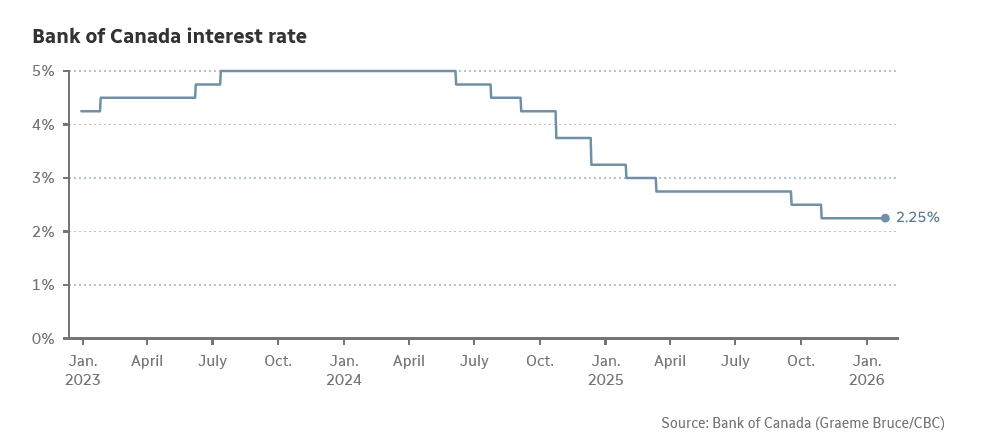
Bank of Canada Holds Rates at 2.25% as Trade Uncertainty Takes Center Stage

The Bank of Canada has once again held its benchmark interest rate at 2.25%, signaling stability for borrowers — but not certainty for the broader economy.

While inflation remains close to the Bank’s 2% target, policymakers are increasingly focused on external risks, particularly the upcoming review of the Canada–U.S.–Mexico Agreement (CUSMA). Governor Tiff Macklem warned that trade relations with the U.S. are becoming less predictable, adding pressure to Canada’s export-driven economy.

Economic growth slowed toward the end of last year as tariffs and trade friction weighed on exports. Looking ahead, the Bank expects modest GDP growth in 2026–27, suggesting limited upside momentum.

For households, this rate pause provides breathing room. Mortgage rates are unlikely to rise in the near term, and economists suggest the Bank’s next move would more likely be a cut if growth weakens further.

Bottom line: inflation may be under control, but trade risk is now the biggest wildcard influencing interest rate policy.

Source: CBC News

Read More..

Read

🏡 Why December 2025 Creates Opportunity for GTA Buyers

Pricing Strategy Matters More Than Ever

If you’re thinking of selling in the GTA, December 2025 data delivers a clear message:
👉 The market no longer “forgives” overpricing.

Homes are selling — but only when sellers align with current buyer expectations.


📊 Seller Reality Check – December 2025

  • Buyers are taking longer to decide

  • Average LDOM sits around 40–45 days

  • Sale-to-list ratios below 100% mean negotiation is normal

  • Active listings are elevated across all regions

This is no longer a market where “testing a higher price” comes without consequences.


💡 Why Some Homes Sell and Others Sit

The data shows a clear pattern:

Homes That Sell:

✔ Correctly priced from day one
✔ Professionally staged or well-presented
✔ Backed by strong online exposure
✔ Positioned within realistic market ranges

Homes That Sit:

✖ Listed based on past peak prices
✖ Ignoring competing inventory
✖ Relying on hope instead of data


🧮 Understanding Buyer Behavior

Buyers in December 2025 are:

  • Comparing multiple properties

  • Negotiating conditions and price

  • Walking away from overpriced listings

Once a listing goes stale, price reductions rarely recover lost momentum.


🏁 Seller Strategy for Early 2026

If you plan to sell:
1️⃣ Get a data-based market value, not an estimate
2️⃣ Understand your local competition, not just GTA averages
3️⃣ Price to attract attention in the first 14 days
4️⃣ Prepare your home to outperform similar listings

📣 Smart sellers don’t chase the market — they meet it early.


🏡 Why December 2025 Creates Opportunity for GTA Buyers

More Choice, More Leverage, Better Negotiation

For buyers, December 2025 is quietly one of the most favorable environments seen in years.

While headlines focus on prices, the real story is selection and leverage.


🔑 Buyer Advantage Snapshot – December 2025

  • Elevated active listings = more options

  • Longer days on market = negotiating power

  • Sale-to-list ratios below 100% = price flexibility

  • Sellers are more open to:

    • Price adjustments

    • Conditions

    • Closing date flexibility


🏢 Condo Buyers: The Strongest Position

Condo apartments show:

  • High inventory levels

  • Longer LDOM (~45+ days)

  • Softer pricing compared to prior years

This allows buyers to:
✔ Negotiate price
✔ Request conditions
✔ Be selective on building quality


🏠 Freehold Buyers: Still Competitive, But Calmer

Detached and townhomes remain desirable, but:

  • Bidding wars are rare

  • Pricing accuracy matters

  • Well-priced homes still move

Prepared buyers with financing in place are in the strongest position.


⚠️ What Buyers Should Still Watch Closely

Even in a buyer-leaning market:

  • Overpaying is still possible

  • Not all listings are “deals”

  • Building quality and long-term value matter more than short-term discounts


🎯 Buyer Strategy Going Forward

To win in this market:
1️⃣ Know true market value, not asking price
2️⃣ Compare recent sold data carefully
3️⃣ Negotiate confidently but realistically
4️⃣ Focus on long-term fit, not just price

📌 December 2025 rewards informed buyers — not rushed ones.


🏡 Thinking of Buying, Selling, or Investing in the GTA?
Don’t guess—use real data, real listings, and expert guidance.

🔍 Start Exploring Now (Live Search Portals)

👉 Gas Stations for Sale
👉
Commercial & Industrial Properties
👉
Residential Homes Across the GTA
👉
Hotels & Motels – Investment Opportunities
👉
Pre-Construction Condo Projects
👉
Condo Resale Listings (GTA)

📈 Market is shifting—smart investors move early.


📊 Latest Market Insights (Updated Monthly)

✔️ Renting vs. Owning: How $2,500/month could cost you $190,000
✔️ GTA Housing Market — Nov 2025
✔️ Mississauga Condo Market — Q3 2025
✔️ Durham Region Market Report — Oct 2025
✔️ Bill 60 vs Ontario RTA — What’s Changing?

👉 Read more market reports & analysis →


📩 Need Clarity Before You Move?

Get straight answers, not sales pressure.

Sami Chowdhury | Broker
📧 samichy@torontobase.com
🌐 torontobased.com | torontobase.ca

Let’s turn market uncertainty into opportunity.


Read

🏠 What GTA Home Sellers Must Know – December 2025

Pricing Strategy Matters More Than Ever

If you’re thinking of selling in the GTA, December 2025 data delivers a clear message:
👉 The market no longer “forgives” overpricing.

Homes are selling — but only when sellers align with current buyer expectations.


📊 Seller Reality Check – December 2025

  • Buyers are taking longer to decide

  • Average LDOM sits around 40–45 days

  • Sale-to-list ratios below 100% mean negotiation is normal

  • Active listings are elevated across all regions

This is no longer a market where “testing a higher price” comes without consequences.


💡 Why Some Homes Sell and Others Sit

The data shows a clear pattern:

Homes That Sell:

✔ Correctly priced from day one
✔ Professionally staged or well-presented
✔ Backed by strong online exposure
✔ Positioned within realistic market ranges

Homes That Sit:

✖ Listed based on past peak prices
✖ Ignoring competing inventory
✖ Relying on hope instead of data


🧮 Understanding Buyer Behavior

Buyers in December 2025 are:

  • Comparing multiple properties

  • Negotiating conditions and price

  • Walking away from overpriced listings

Once a listing goes stale, price reductions rarely recover lost momentum.


🏁 Seller Strategy for Early 2026

If you plan to sell:
1️⃣ Get a data-based market value, not an estimate
2️⃣ Understand your local competition, not just GTA averages
3️⃣ Price to attract attention in the first 14 days
4️⃣ Prepare your home to outperform similar listings

📣 Smart sellers don’t chase the market — they meet it early.


🏡 Thinking of Buying, Selling, or Investing in the GTA?
Don’t guess—use real data, real listings, and expert guidance.

🔍 Start Exploring Now (Live Search Portals)

👉 Gas Stations for Sale
👉
Commercial & Industrial Properties
👉
Residential Homes Across the GTA
👉
Hotels & Motels – Investment Opportunities
👉
Pre-Construction Condo Projects
👉
Condo Resale Listings (GTA)

📈 Market is shifting—smart investors move early.


📊 Latest Market Insights (Updated Monthly)

✔️ Renting vs. Owning: How $2,500/month could cost you $190,000
✔️ GTA Housing Market — Nov 2025
✔️ Mississauga Condo Market — Q3 2025
✔️ Durham Region Market Report — Oct 2025
✔️ Bill 60 vs Ontario RTA — What’s Changing?

👉 Read more market reports & analysis →


📩 Need Clarity Before You Move?

Get straight answers, not sales pressure.

Sami Chowdhury | Broker
📧 samichy@torontobase.com
🌐 torontobased.com | torontobase.ca

Let’s turn market uncertainty into opportunity.


Read

🏙️ GTA Housing Market Overview – December 2025

What the Numbers Really Say as We Close the Year

As 2025 comes to a close, the Greater Toronto Area housing market is showing clear signs of recalibration rather than collapse. December’s data from the Toronto Regional Real Estate Board (TRREB) reveals a market that has slowed from peak years but is now finding balance between buyers and sellers.

This is not a market driven by panic or frenzy — it’s a measured, data-driven environment where pricing, expectations, and negotiation are all adjusting.


🔢 GTA Market Snapshot – December 2025

Across all TRREB areas, December recorded:

  • Sales: 3,697

  • Average Sale Price: $1,006,735

  • Median Price: $871,250 (varies by property type)

  • New Listings: 4,056

  • Active Listings: Elevated across all segments

  • Average Days on Market (LDOM): ~39–46 days depending on type

  • Average Sale-to-List Price Ratio: ~96%–98%

This confirms one key theme:
👉 Homes are selling, but pricing precision matters more than ever.


🏠 Market Conditions by Property Type

Detached Homes

  • Prices remain the highest, but activity is selective

  • Buyers are patient and highly price-sensitive

  • Overpricing leads directly to longer market time

Townhouses (Freehold & Condo)

  • One of the most resilient segments

  • Strong appeal for move-up buyers and downsizers

  • Sale-to-list ratios remain relatively firm

Condo Apartments

  • Highest inventory levels

  • Longer days on market

  • Buyers have negotiation leverage, especially on older buildings


📉 Price Trends & MLS® Home Price Index

The MLS® Home Price Index shows year-over-year declines across most regions, generally ranging between -5% and -10%, depending on location and property type.

This is not a crash.
It is a correction from unsustainable highs seen in earlier years.


🔍 What This Means Going Into 2026

  • The market is stable but unforgiving to unrealistic pricing

  • Sellers must compete on price, presentation, and marketing

  • Buyers can negotiate — but well-priced homes still sell

📌 Bottom line:
December 2025 closes the year with a market that rewards clarity, strategy, and preparation — not guesswork.


🏡 Thinking of Buying, Selling, or Investing in the GTA?
Don’t guess—use real data, real listings, and expert guidance.

🔍 Start Exploring Now (Live Search Portals)

👉 Gas Stations for Sale
👉
Commercial & Industrial Properties
👉
Residential Homes Across the GTA
👉
Hotels & Motels – Investment Opportunities
👉
Pre-Construction Condo Projects
👉
Condo Resale Listings (GTA)

📈 Market is shifting—smart investors move early.


📊 Latest Market Insights (Updated Monthly)

✔️ Renting vs. Owning: How $2,500/month could cost you $190,000
✔️ GTA Housing Market — Nov 2025
✔️ Mississauga Condo Market — Q3 2025
✔️ Durham Region Market Report — Oct 2025
✔️ Bill 60 vs Ontario RTA — What’s Changing?

👉 Read more market reports & analysis →


📩 Need Clarity Before You Move?

Get straight answers, not sales pressure.

Sami Chowdhury | Broker
📧 samichy@torontobase.com
🌐 torontobased.com | torontobase.ca

Let’s turn market uncertainty into opportunity.


Read

📱🧠 10 Powerful Tips to Manage Screen Time for Kids & Families

🌍 Why Screen Time Has Become One of the Biggest Parenting Challenges

Phones in our pockets. Tablets on bedside tables. Laptops at school and work. Smart TVs streaming unlimited shows on demand. 🎬📲

Modern families are surrounded by screens — everywhere, all the time.

While technology has brought convenience, education, and connection, excessive screen time is increasingly linked to:

  • 😴 Poor sleep quality

  • 😟 Anxiety and mood changes

  • 🧠 Reduced attention span

  • 🏃 Less physical activity

  • 👨‍👩‍👧 Weaker family connection

Most parents know this — yet managing screen time consistently feels overwhelming.

The good news?
You don’t need extreme rules or constant battles.

With the right structure, conversations, and habits, screen time can become balanced, intentional, and even beneficial.

Below are 10 proven, parent-approved strategies to help your family build healthier screen habits — without guilt, fear, or daily arguments.


1️⃣ 👨‍👩‍👧 Create a Family Media Plan (Together)

Screen rules work best when kids feel heard.

Instead of imposing limits unilaterally, hold a family meeting and discuss:

  • How screens are currently used

  • What’s working — and what’s not

  • When screens interfere with sleep, school, or family time

📋 A strong family media plan should include:

  • Daily or weekly screen limits

  • Screen-free times and zones

  • Rules for homework, gaming, and social media

  • Age-appropriate expectations

When children help shape the rules, they’re more likely to respect them.


2️⃣ 👀 Be Present When Screens Are Used

Screens shouldn’t replace human connection — they should complement it.

For younger children:

  • Talk about what’s happening on screen

  • Ask questions

  • Reinforce learning

For older children and teens:

  • Discuss storylines, values, and real-world connections

  • Talk about online behavior, safety, and social pressure

Being present also allows parents to:

  • Ensure age-appropriate content

  • Spot unhealthy patterns early

  • Turn screen time into bonding time


3️⃣ 🗣️ Talk Openly About Acceptable Screen Use

Just as kids learn:

  • 🚦 Road safety

  • 🚲 Bicycle rules

  • 🧍 Stranger awareness

They also need digital literacy education.

Key conversations should include:

  • Online safety and privacy

  • Respectful communication

  • Avoiding harmful content

  • Recognizing when screen time interferes with real life

Make screen rules about wellbeing, not punishment.


4️⃣ 🎓 Encourage Educational, Active & Social Screen Time

Not all screen time is harmful — how screens are used matters more than how long.

Encourage screens for:

  • 📞 Video calls with family

  • 🎥 Creating videos or animations

  • 🧪 Learning new skills

  • 🧩 Educational games

  • 🏋️ Fitness or movement activities

When screen use is purposeful, kids develop creativity instead of dependency.


5️⃣ ✅ Help Children Choose High-Quality Content

Fast-paced, overstimulating content can affect attention and emotional regulation.

When selecting content:

  • Choose calm, age-appropriate programming

  • Look for positive role models and values

  • Avoid excessive violence, language, or advertising

🔍 Common Sense Media is an excellent resource for:

  • Age-based ratings

  • Content breakdowns

  • Parent reviews


6️⃣ 🚫 Schedule Regular Screen-Free Times

Clear boundaries reduce daily negotiations.

Popular screen-free strategies include:

  • No screens during playdates

  • No devices in bedrooms

  • Screens only after homework

  • Screen-free Sundays

  • Tech-free vacations

📌 Parents must model this too — kids notice consistency.


7️⃣ 🔌 Turn Off Screens When Not in Use

Background screens silently pull attention away from:

  • Imaginative play

  • Reading

  • Creative thinking

Turning screens off helps children:

  • Focus longer

  • Engage deeply

  • Discover independent play


8️⃣ 😴 Turn Screens Off at Least One Hour Before Bed

Blue light and stimulation delay melatonin release.

This can lead to:

  • Trouble falling asleep

  • Poor sleep quality

  • Morning fatigue

Create a calming bedtime routine:

  • 📖 Reading

  • 🎧 Music

  • 🛁 Bath time

  • 🧘 Quiet conversation

Sleep quality improves dramatically with consistent screen-free evenings.


9️⃣ 🍽️ Limit Screen Use in Public Places

Screens can be convenient — but overuse limits learning patience and social skills.

Instead of defaulting to devices:

  • Pack a “busy bag”

  • Play verbal games

  • Encourage observation and conversation

Screens should be a last resort, not the first solution.


🔟 🍽️ Make Mealtimes Screen-Free (For Everyone)

Family meals build:

  • Communication skills

  • Emotional connection

  • Healthy eating habits

Screens at the table:

  • Distract from conversation

  • Reduce hunger awareness

  • Weaken family bonds

📌 Adults benefit too — emails and notifications can wait.


🌟 Final Thoughts: Balance, Not Perfection

Managing screen time isn’t about elimination — it’s about intention.

With:

  • Clear rules

  • Open conversations

  • Consistent routines

Your family can enjoy technology without letting it take over daily life.

Family routines don’t exist in a vacuum — space, layout, and neighbourhood environment play a quiet but powerful role in how families live day to day.

For parents who own a home, understanding how today’s market conditions affect its value can be helpful when planning future changes, upgrades, or moves.

Request a data-based market value assessment for your home.

Sami Chowdhury
Real Estate Broker | Toronto
torontobased.com | torontobase.ca


Read

Open House: 65 Turntable Crescent, Toronto

📍 65 Turntable Crescent unit-90, Toronto

Asking: $699,000.00

🏡 3-Bedroom Stacked Townhouse Condo

📅 Saturday & Sunday, January 10 & 11, 2026

🕑 2:00 PM – 4:00 PM  I Contact me directly for questions or private showings

View the full listing   |    Watch the complete walk-through video

If you’re searching for a true three-bedroom home in the city, this one deserves a closer look. Located in Toronto’s west end, 65 Turntable Crescent is a two-storey stacked townhouse condo that offers the space and layout many buyers struggle to find in today’s condo market.

We’re hosting an open house on Saturday and Sunday, January 10 & 11, from 2:00 PM to 4:00 PM, and this blog will walk you through the property, the layout, and the neighbourhood so you know exactly what to expect before you visit.

Open House Details

Address: 65 Turntable Crescent unit-90, Toronto
Dates: Saturday & Sunday, January 10 & 11, 2026
Time: 2:00 PM – 4:00 PM

This is a great opportunity to see how the space feels in person, especially if you’re deciding between a condo and a townhouse-style home.


Property Overview: A Townhouse Feel with Condo Convenience

This home is a stacked townhouse condo, meaning you get the benefits of townhouse-style living without the maintenance responsibilities of a freehold property.

Key highlights include:

  • Two-storey layout

  • Private main-floor entrance

  • Three bedrooms total

  • Two full bathrooms on the upper level

  • Laminate flooring on both floors

  • Tile flooring in the kitchen and bathrooms

  • One owned underground parking space

Unlike many condos, this layout offers real separation between living and sleeping areas, which is ideal for families, professionals working from home, or buyers upgrading from a smaller condo.


Interested in seeing this home in person? Open house details are above, or feel free to reach out directly. I will arrange a private viewing.

Main Level: Functional, Bright, and Flexible

As you enter the unit from your private main-floor entrance, you’re welcomed into a bright and open living space designed for everyday comfort.

The open-concept living and dining area connects seamlessly with the kitchen, creating a practical layout for entertaining or relaxing after a long day. Laminate flooring runs throughout the main level, while the kitchen and washroom feature durable tile flooring.

One of the standout features on this level is the third bedroom, which offers flexibility rarely found in condo living. This room works perfectly as:

  • A home office

  • A guest bedroom

  • A flex room for growing families

There is also a walk-out to a private patio, adding valuable outdoor space for morning coffee or summer evenings.


Upper Level: Comfortable Bedrooms and Full Bathrooms

The upper level is dedicated entirely to rest and privacy.

Here you’ll find:

  • Two spacious bedrooms

  • Two full bathrooms

  • Primary bedroom with ensuite

  • Ensuite laundry conveniently located upstairs

The primary bedroom includes generous closet space and its own private bathroom, while the second bedroom is well-sized and ideal for children, guests, or a second home office.

This level provides a quiet retreat from the main living area below, making the home feel more like a traditional townhouse than a condo.


Neighbourhood: Toronto West End Living

65 Turntable Crescent is located in a west-end pocket that has seen steady transformation over the years. Once shaped by rail and industrial uses along the Davenport corridor, the area has evolved into a well-planned residential community with a strong neighbourhood feel.

Today, residents enjoy:

  • Walkable streets and internal pathways

  • Nearby parks and green spaces

  • Local shops and everyday amenities

  • A community-oriented environment

This is an area that appeals to buyers who want to stay connected to the city while enjoying a calmer residential setting.


Transit & Connectivity

One of the major advantages of this location is excellent transit access.

  • TTC subway access nearby provides easy east–west travel across Toronto

  • Multiple bus routes connect you to surrounding neighbourhoods

  • UP Express access offers fast connections between downtown Toronto and Pearson Airport

Whether you commute daily or travel frequently, this location makes getting around the city simple and efficient.


Who This Home Is Perfect For

This property is ideal for:

  • Buyers upgrading from a one- or two-bedroom condo

  • Professionals who need dedicated work-from-home space

  • Small families looking for a practical city layout

  • Buyers who want townhouse-style living without freehold maintenance

If you’ve been struggling to find a three-bedroom option within Toronto that still feels livable, this home checks many of the right boxes.


Visit the Open House

Seeing the layout in person makes a big difference with this type of home. Photos and videos are helpful, but walking through the space gives you a true sense of how it lives day to day.

📅 Open House: Saturday & Sunday, January 10 & 11, 2026
🕑 2:00 PM – 4:00 PM
📍 65 Turntable Crescent, Toronto

If you’d like full listing details, directions, or to book a private showing, feel free to reach out directly.


Interested in This Property?

You can:

View the full listing

Watch the complete walk-through video

Contact me directly for questions or private showings

This home offers a rare combination of space, layout, and location in Toronto’s west end — and it’s best appreciated in person.


Sami Chowdhury
Broker | RE/MAX Realtron Realty Inc.
Toronto Real Estate
📍 Greater Toronto Area

🌐 https://www.torontobased.com
🌐
https://www.torontobase.ca

📩 For private showings or open house details, contact directly.


Read

Upper Jarvis Development Plan: How Rogers’ Land Assembly Could Transform Toronto

 🏙️ Rogers, Huntley & Isabella: How One Development Could Redefine Upper Jarvis — and Toronto’s Skyline — for Decades


✨ Introduction: why this project matters far beyond one intersection

Toronto is not just growing — it is transforming.
Not street by street, but block by block, skyline by skyline.

Every decade, a handful of development proposals quietly determine what the city will feel like for generations. The proposed redevelopment at 30–40 Huntley Street and 112–124 Isabella Street is one of those moments.

On paper, this is a plan for two tall residential rental towers — roughly 56 and 60 storeys, adding more than 1,300 new homes near downtown. But in reality, this project sits at the intersection of:

🏢 Corporate land ownership
🏠 Heritage homes and identity
🚇 Transit-oriented density
🏗️ Toronto’s high-rise future
📉 A housing and rental crisis

Located steps from a long-standing Rogers Communications campus, this site has been quietly shaping — and waiting to reshape — Upper Jarvis for decades.

This blog explores what’s being proposed, why it’s controversial, how it fits Toronto’s planning framework, and what it tells us about the city Toronto is becoming.


📍 Where is this happening? Understanding Upper Jarvis

Upper Jarvis is one of Toronto’s most layered neighbourhoods.

Within a few blocks, you’ll find:

  • mid-century office towers 🏢

  • post-war rental high-rises 🏘️

  • 19th-century houses 🏠

  • major institutions and transit corridors 🚇

This mix didn’t happen by accident. It evolved as Toronto expanded eastward from Yonge Street, absorbing older residential streets into a denser downtown fabric.

Why planners care about this area

From a City perspective, Upper Jarvis checks all the “intensification” boxes:

  • ✔️ close to subway lines

  • ✔️ near major employment

  • ✔️ existing tall buildings

  • ✔️ underutilized parcels

In planning language, this is exactly where density is supposed to go.

But for residents, it’s also a place with memory, scale, and human rhythm — which is why projects like this provoke strong emotions.


🏢 Rogers and the neighbourhood: a history that explains everything

To understand Huntley & Isabella, you must understand Rogers’ long relationship with this area.

🕰️ The early anchor: 333 Bloor Street East

Completed in 1956, the former Confederation Life Insurance Company Building at 333 Bloor Street East later became associated with Rogers’ operations.

At the time, this building represented:

  • Toronto’s post-war corporate expansion

  • the emergence of Bloor Street East as an office corridor

  • a shift away from purely residential uses

It normalized large institutional buildings in an area that still contained small houses and walk-ups.

🏗️ The campus era: Rogers expands

By the late 20th century, Rogers further entrenched itself in the area with major office and campus buildings near Mount Pleasant Road and Ted Rogers Way.

These buildings did more than house employees:

  • they reshaped pedestrian flows 🚶

  • influenced traffic and servicing patterns 🚚

  • and quietly transformed nearby land into strategic assets

Over time, many properties around Huntley and Isabella felt “frozen” — waiting for a future that never quite arrived.

Until now.


🏠 The Huntley–Isabella site: quiet streets, growing pressure


🧠 Quiet streets don’t always stay quiet.

Sites like Huntley & Isabella show how proximity to transit, employment, and existing density can quietly turn ordinary properties into strategic land over time.

If you own property in or near evolving corridors like Upper Jarvis, understanding what that context means for today’s value requires local, comparable data — not assumptions.

Request a data-based market value assessment for your property.


For years, the buildings at Huntley and Isabella existed in contrast to their surroundings:

  • modest low-rise structures

  • several heritage-listed homes

  • a small number of rental units

As Toronto’s housing shortage worsened, this contrast became uncomfortable.

💬 Why are centrally located properties sitting underused while people can’t find housing?
💬 Why does land next to transit remain so low-density?

These questions eventually turned into pressure — political, public, and media-driven.

Coverage by BlogTO helped bring the issue into public view, reframing the site from “quiet residential street” to “missed housing opportunity.”

🏗️ The proposal: what exactly is being planned?


 🔢 Key details (as publicly reported)

The proposed redevelopment includes:

🏙️ Two residential towers
📏 Approx. 60 and 56 storeys
🏠 ~1,362 residential units
🏢 Purpose-built rental housing
✍️ Architect: Diamond Schmitt
🏛️ Heritage integration at the podium level

This is not a small infill project. It is a city-scale intervention.

Why rental matters

Unlike investor-driven condominiums, purpose-built rentals:

  • house long-term residents

  • support stable communities

  • create predictable population growth

In a city where rental vacancy rates remain tight, this aspect alone gives the project policy weight.


🧭 City of Toronto planning process: what happens next?

The City reviews projects like this through a multi-year process involving:

📑 Zoning By-law Amendments
📐 Urban Design Review
🌬️ Wind & shadow studies
🚦 Transportation & servicing analysis
🏛️ Heritage Impact Assessments

This is tracked through the City’s Application Information Centre (AIC):
🔗 https://www.toronto.ca/city-government/planning-development/application-information-centre/

What planners will scrutinize most

For towers of this height, City staff typically focus on:

⚖️ Tower spacing & massing
🌞 Shadow impacts on streets & parks
🌬️ Pedestrian wind comfort
🏛️ Authenticity of heritage integration
🏠 Rental replacement compliance
🌳 Public realm improvements

No detail is minor at this scale.


🏛️ Heritage: preservation, compromise, or symbolism?

Several buildings on the site are listed on Toronto’s Heritage Register.

📌 Important distinction:

  • Listed ≠ fully designated

  • but listing still triggers review and political sensitivity

The proposed approach

The plan calls for retaining and integrating heritage elements into the base of the new towers — a familiar compromise in Toronto.

For some, this is:
✅ a practical balance
❌ a symbolic gesture

This debate will define much of the community response.


🏘️ Rental replacement: policy meets reality

Toronto has one of the strongest rental replacement policies in Canada.

Any demolition of rental housing triggers:

  • replacement units

  • potential tenant assistance

  • City oversight

In this case, existing rental units are proposed to be replaced, aligning the project with municipal housing objectives.

🔗 City policy reference:
https://www.toronto.ca/city-government/planning-development/official-plan-guidelines/housing/


🚶‍♂️ How two towers change daily life in Upper Jarvis


 👥 Population impact

1,300+ homes means:

  • more foot traffic

  • more transit riders

  • more demand for retail & services

Done well, this can energize streets.
Done poorly, it can overwhelm them.

🌬️ Wind & shadow

Tall buildings alter microclimates:

  • wind tunneling 🌪️

  • longer shadows in spring/fall ☀️

These aren’t technical footnotes — they shape everyday comfort.

🧱 The podium matters most

In modern Toronto planning, the podium is the real building.

It determines:

  • how welcoming the street feels

  • whether heritage feels respected

  • whether the towers belong to the neighbourhood


🌆 The bigger picture: Toronto’s vertical transformation

This project is not unique. It’s part of a city-wide pattern.

Over the last 20 years, Toronto has:
📈 embraced high-rise living
🚇 prioritized transit-oriented density
🏙️ accepted tall buildings as normal

Neighbourhoods like Upper Jarvis are now front-line growth zones.

🔗 City of Toronto Tall Building Guidelines:
https://www.toronto.ca/city-government/planning-development/planning-studies-initiatives/tall-buildings/

What the next 30 years likely look like

Expect:

  • more multi-tower sites

  • more heritage integration compromises

  • more rental towers

  • more debate over sunlight & public space

The skyline we see today is only the beginning.


⚖️ Is this good growth?

That depends on execution.

If this project delivers:
✅ livable rental homes
✅ meaningful heritage integration
✅ comfortable streets
✅ thoughtful public realm

…it could become a model for balanced intensification.

If it fails:
❌ blank podiums
❌ token heritage
❌ harsh wind & shadows

…it becomes another cautionary tale.


🧠 Why this story matters

🏙️ Developments like Huntley–Isabella don’t just reshape skylines — they quietly redefine land value long before construction begins.

If you own property in Toronto and want a clear, realistic understanding of how planning policy, zoning pressure, and neighborhood change translate into current market value, the most reliable starting point is a data-driven comparison based on recent local sales.

Request your home’s current market value (CMA).


This is not just a development story.

It’s about:

  • who controls urban land

  • how cities respond to housing crises

  • how heritage survives vertical growth

  • how Toronto defines itself for future generations

Decisions made here will echo across dozens of similar sites.


💬 Final question for readers

If you could influence this project, what would matter most to you?

🏛️ Heritage preservation
🏠 More rental housing
🌳 Better public spaces
📏 Reduced height & massing

Your answer shapes the Toronto of tomorrow.


🔗 References & Sources

  1. City of Toronto – Application Information Centre
    https://www.toronto.ca/city-government/planning-development/application-information-centre/

  2. City of Toronto – Tall Building Guidelines
    https://www.toronto.ca/city-government/planning-development/planning-studies-initiatives/tall-buildings/

  3. City of Toronto – Housing & Rental Replacement Policy
    https://www.toronto.ca/city-government/planning-development/official-plan-guidelines/housing/

  4. BlogTO – Huntley & Isabella development coverage
    https://www.blogto.com/real-estate-toronto/

  5. Diamond Schmitt Architects – Portfolio
    https://dsai.ca/


🏡 Thinking of Buying, Selling, or Investing in the GTA?
Don’t guess—use real data, real listings, and expert guidance.

🔍 Start Exploring Now (Live Search Portals)

👉 Gas Stations for Sale
👉
Commercial & Industrial Properties
👉
Residential Homes Across the GTA
👉
Hotels & Motels – Investment Opportunities
👉
Pre-Construction Condo Projects
👉
Condo Resale Listings (GTA)

📈 Market is shifting—smart investors move early.


📊 Latest Market Insights (Updated Monthly)

✔️ Renting vs. Owning: How $2,500/month could cost you $190,000
✔️ GTA Housing Market — Nov 2025
✔️ Mississauga Condo Market — Q3 2025
✔️ Durham Region Market Report — Oct 2025
✔️ Bill 60 vs Ontario RTA — What’s Changing?

👉 Read more market reports & analysis →


📩 Need Clarity Before You Move?

Get straight answers, not sales pressure.

Sami Chowdhury | Broker
📧 samichy@torontobase.com
🌐 torontobased.com | torontobase.ca

Let’s turn market uncertainty into opportunity.


Read
This website may only be used by consumers that have a bona fide interest in the purchase, sale, or lease of real estate of the type being offered via the website. The data relating to real estate on this website comes in part from the MLS® Reciprocity program of the PropTx MLS®. The data is deemed reliable but is not guaranteed to be accurate.