Every year on February 2, millions of people across North America pause—if only briefly—to see whether a groundhog has seen its shadow. The moment feels lighthearted, almost silly. Yet Groundhog Day has survived for well over a century, blending folklore, weather prediction, community ritual, and pop culture into one enduring tradition.
But where did it come from? Why a groundhog? And why does this small event still capture attention in an age of satellites, weather apps, and climate models?
Let’s dig in.
🌱 What Is Groundhog Day?
Groundhog Day is a traditional observance held on February 2, centered on a simple idea:
If the groundhog sees its shadow, winter will last six more weeks
If it does not, an early spring is on the way
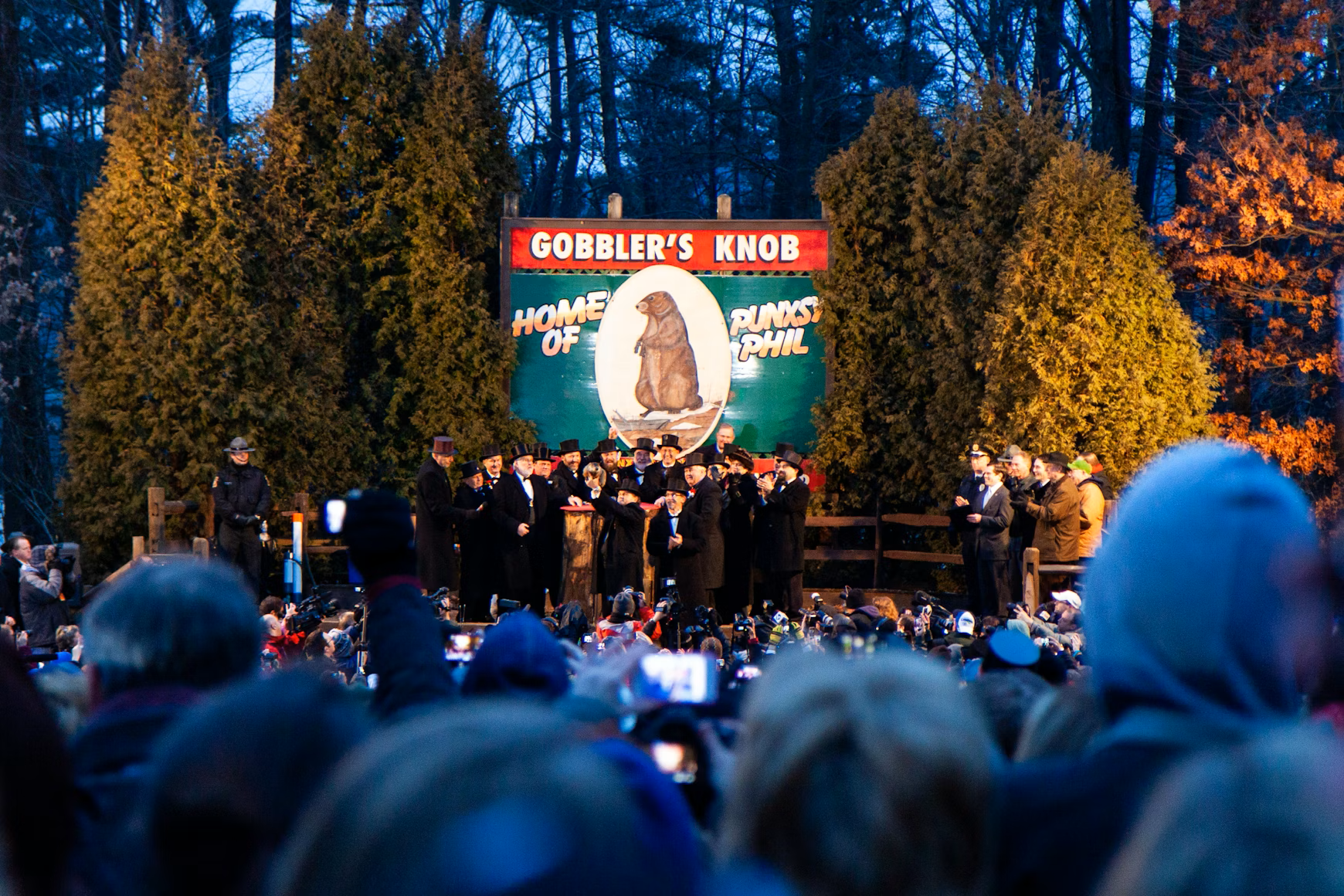
The most famous groundhog is Punxsutawney Phil, who lives in Punxsutawney. Each year, crowds gather at Gobbler’s Knob to watch Phil emerge from his burrow while an official proclamation is read.
While Punxsutawney Phil is the celebrity, many regions have their own local groundhogs making predictions—each with loyal followers.

🕰️ Ancient Roots: Older Than America
Despite its playful tone, Groundhog Day has deep historical roots.
🌍 Celtic & European Origins
The tradition traces back to ancient European weather lore, especially Candlemas, a Christian feast day also held on February 2. Candlemas marked the midpoint between the winter solstice and spring equinox.
A popular saying went something like:
If Candlemas Day be fair and bright,
Winter will have another flight.
Clear weather meant a longer winter. Cloudy weather suggested spring was closer.
🦔 From Hedgehogs to Groundhogs
In Germany, people watched hedgehogs for similar signs. When German immigrants settled in Pennsylvania in the 18th and 19th centuries, hedgehogs were nowhere to be found—but groundhogs were plentiful. The tradition adapted, and a new symbol was born.

🇺🇸 How Groundhog Day Took Hold in North America
The first documented Groundhog Day celebration occurred in 1887 in Punxsutawney, Pennsylvania. Local newspapers helped popularize the event, turning a regional folk practice into a national curiosity.
Over time:
Clubs and societies formed around the tradition
Ceremonies became more theatrical
Media coverage exploded, especially with radio and television
By the mid-20th century, Groundhog Day was firmly embedded in North American culture.
🔬 Does Groundhog Day Actually Work?
Short answer: not really—but that’s not the point.
📊 Accuracy Rates
Studies comparing predictions to actual weather patterns show accuracy hovering around 35–40%, which is worse than a coin flip. Even Phil’s own handlers joke about it.
🌡️ Why It Can’t Be Precise
Weather patterns are complex and regional
Seasonal transitions aren’t uniform
Climate variability makes long-term prediction tricky
Yet people keep watching—not for scientific certainty, but for tradition and fun.

🎭 A Celebration of Community, Not Forecasting
Groundhog Day endures because it’s about shared experience.
What It Really Represents:
🧠 Hope at winter’s midpoint
👨👩👧👦 Community gathering
📺 A moment of collective pause
😄 Humor in the face of long winters
In colder regions, February can feel endless. Groundhog Day offers a psychological milestone—we’re halfway through.
🎬 Pop Culture Impact: The Movie That Changed Everything
The 1993 film Groundhog Day, starring Bill Murray, permanently elevated the holiday’s cultural status.
The movie’s themes—repetition, self-improvement, personal growth—gave the phrase “groundhog day” a new meaning in everyday language. Today, it’s commonly used to describe situations that feel endlessly repetitive.
Ironically, the movie has little to do with the actual holiday, yet it helped cement its place in global pop culture.
🌍 Groundhog Day in the Modern World
In the age of:
Real-time weather satellites
AI-powered forecasting
Climate science
Groundhog Day survives precisely because it’s not serious.
It reminds us:
Not everything has to be optimized
Traditions don’t need precision to have value
Rituals connect generations
Schools teach it. Cities celebrate it. Social media jokes about it. News outlets cover it every year—knowing full well how it will end.
Why Groundhog Day Still Matters
Groundhog Day isn’t about predicting spring.
It’s about:
Finding light in the depth of winter
Laughing at ourselves
Holding onto traditions that make time feel human
In a world increasingly driven by data and speed, Groundhog Day slows things down—if only for a moment—and invites us to smile at the absurdity of waiting for a rodent to tell us what’s next.
And somehow, that still feels comforting.
Groundhog Day is all about predicting what’s coming next.
If you’re a homeowner thinking:
“Should I sell now or wait until spring?”
“What would my home realistically sell for today?”
“How competitive is my neighborhood right now?”
📊 Request your FREE, customized home value report
No obligation. No guesswork. Just real numbers.
— Sami Chowdhury | TorontoBased.com 🏙️
Local insight. Real data. Honest advice.