Falling Inventory Is Starting to Change the Balance
August 2026 GTA Housing Market
The Greater Toronto Area housing market entered August 2026 with a very different problem than it faced earlier in the market cycle.
The issue was no longer simply that there were too many homes for buyers to choose from.
Instead, the number of homes coming onto the market and the number remaining available for sale both fell sharply compared with a year earlier. Buyer demand did not suddenly explode, but supply contracted much faster than sales activity.
That distinction matters.
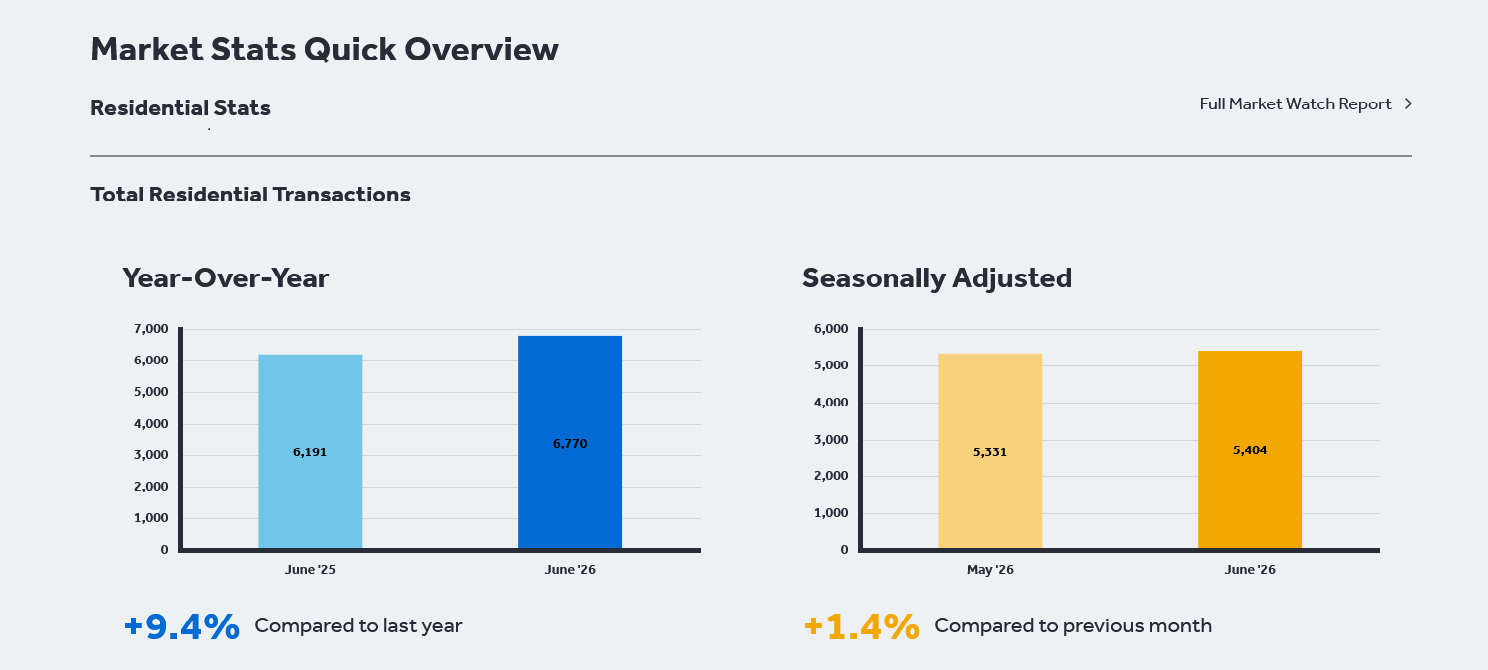
According to the August 2026 Toronto Regional Real Estate Board data, GTA REALTORS® reported 5,057 residential sales, down 2.1% from August 2025. At the same time, only 12,075 new listings entered the market, representing a much larger 14.1% year over year decline. Active listings fell from 27,594 in August 2025 to 24,482 in August 2026, a reduction of approximately 11.3%.
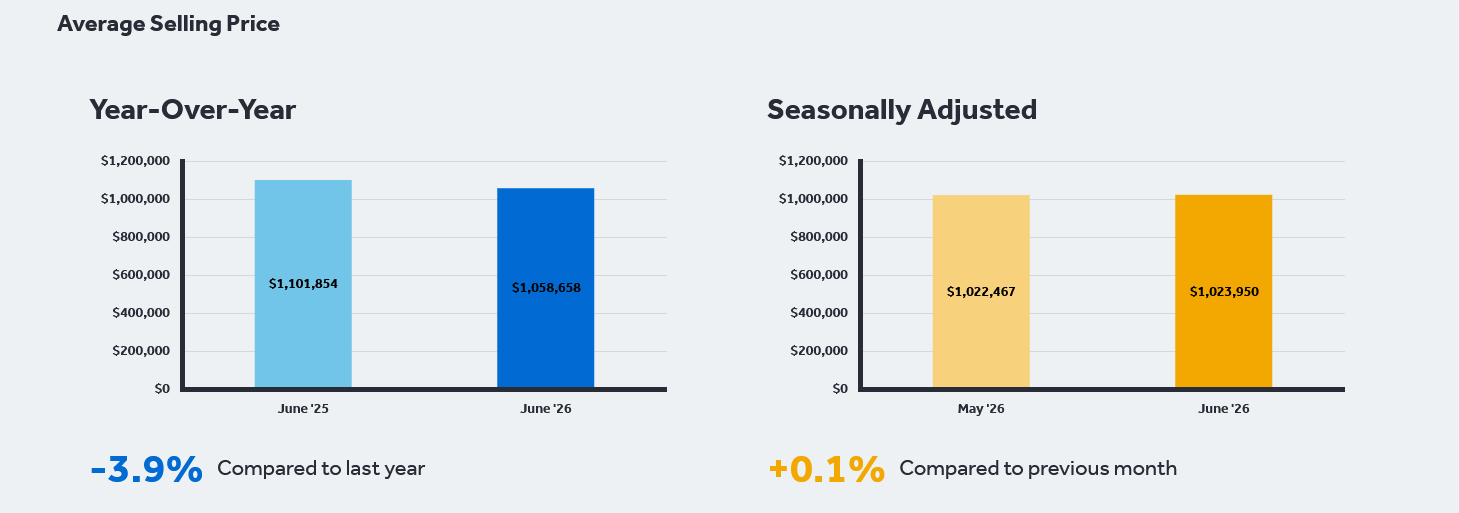
The average selling price was $993,410, down 2.7% from $1,021,300 one year earlier, while the MLS Home Price Index Composite benchmark was 4.5% lower year over year.
Taken together, these numbers point to a market that is not yet strongly favouring sellers, but is no longer offering buyers the same degree of excess selection that existed when inventory was expanding more aggressively.
The August market is best understood as a balanced market that is tightening.
For buyers, that means opportunities still exist, but the assumption that waiting automatically creates more leverage is becoming less reliable.
For sellers, fewer competing listings can help, but proper pricing and presentation remain essential because buyers are still cautious.
For investors, the market may offer more attractive acquisition conditions than during stronger pricing periods, but property selection and carrying costs remain critical.
The important question is no longer simply whether sales are rising or falling.
The more important question is: What happens when demand remains relatively stable while supply starts disappearing?
That is the story of the GTA housing market in August 2026.
The Headline Numbers Only Tell Part of the Story
At first glance, August does not appear particularly dramatic.
Sales declined by 2.1% year over year. Average prices declined by 2.7%. The MLS HPI Composite benchmark remained 4.5% below August 2025 levels.
Those figures could easily be interpreted as another soft month. But that interpretation misses the most important change.
The supply side of the market contracted significantly faster than demand. New listings were down 14.1%. Active listings were down approximately 11.3%. Sales were down only 2.1%.
That means the number of buyers completing purchases remained relatively close to last year's level even though the number of homes becoming available declined substantially.
This does not automatically create a seller's market. But it does change the direction of market pressure.
When sales fall faster than inventory, buyers generally gain leverage. When inventory falls faster than sales, some of that leverage begins to disappear. August 2026 falls into the second category.
Why Falling New Listings Matter
New listings represent the fresh supply entering the market.
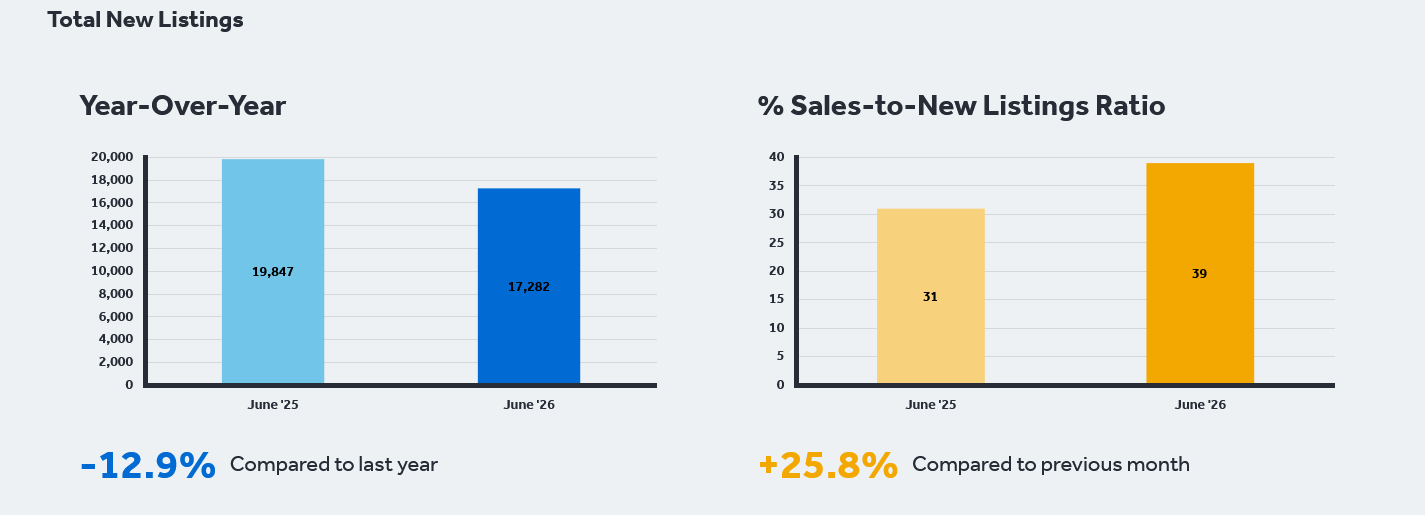
In August 2025, the GTA recorded 14,052 new listings. In August 2026, that number fell to 12,075.
That is a decline of 1,977 listings in a single year over year comparison.
The percentage change is even more revealing. A 14.1% decline in new listings is far larger than the 2.1% decline in sales.
This means the supply pipeline weakened much more quickly than buyer activity.
Imagine two competing forces. On one side are buyers leaving the market. On the other side are sellers choosing not to list. In August, the second force was much stronger.
A buyer may still have negotiating power when choosing among ten similar homes. That same buyer may behave differently when only four or five comparable properties are available.
The absolute number of buyers may not need to increase dramatically for competition to strengthen. Sometimes the market changes because supply falls. That is exactly why listing inventory deserves as much attention as sales.
Active Inventory Also Moved Lower
New listings show what entered the market. Active listings show what remained available.
That number also declined materially. Active listings fell from 27,594 in August 2025 to 24,482 in August 2026.
That is a reduction of 3,112 homes, or approximately 11.3%.
This matters because active listings represent the actual pool of properties buyers can consider at a given point in time.
A market with declining active inventory can feel tighter even if sales are not rising.
This is especially important when evaluating neighbourhood level conditions. The GTA headline number covers an enormous geographic area. Individual communities can become significantly tighter before the overall regional data fully reflects the shift.
A buyer looking in a specific price range, school district, housing type or neighbourhood may experience much less choice than the GTA total suggests. That is one reason market analysis must move beyond broad averages.
Prices Are Still Lower Than Last Year
Supply tightened, but prices had not yet fully responded.
The average GTA selling price in August was $993,410, compared with $1,021,300 in August 2025.
That represents a decline of $27,890, or approximately 2.7%.
The MLS HPI Composite benchmark declined even more, falling 4.5% year over year.
This tells us that August was not a market in which sellers suddenly regained complete pricing control.
Buyers were still transacting at values below those seen one year earlier.
Inventory tightening does not immediately equal price growth. Markets often move through stages: first inventory changes, then negotiating conditions change, then days on market may change, and then prices may respond.
August appears to sit somewhere in the middle of that process. The supply environment became more favourable to sellers, while price measures were still reflecting the softer conditions that existed earlier.
Month Over Month Data Shows Signs of Stabilization
Year over year data tells us where the market stands compared with August 2025. Month over month data can help identify whether the market is continuing in the same direction or starting to change.
TRREB reported that seasonally adjusted August sales were slightly lower than July, while new listings increased month over month.
At the same time, the seasonally adjusted MLS HPI Composite was essentially flat, while the average selling price edged higher compared with July.
That is not evidence of a major price rebound. But it is also not consistent with a market experiencing accelerating price deterioration.
The most reasonable interpretation is stabilization.
Prices remained lower than last year. But the near term decline was becoming less pronounced. This is exactly the type of period where market behaviour can change before the annual statistics turn positive.
Homes Were Still Taking Time to Sell
One important reason not to overstate the seller advantage is days on market.
Average listing days on market were approximately 35 days in August 2026, compared with about 33 days one year earlier. Average property days on market were approximately 51 days, compared with about 49 days in August 2025.
TRREB distinguishes these measurements carefully. LDOM reflects the average days a sold listing spent on the market. PDOM reflects the total exposure of the property, including circumstances where the property may have been relisted.
The difference matters because some sellers may cancel, adjust pricing and return to market. A home that appears to have sold in twenty days on a new listing may have actually been marketed for much longer.
The August data shows that buyers remained selective. Even with fewer listings available, they were not purchasing indiscriminately.
That creates a very particular type of market. Buyers have less choice, but they still demand value. Sellers face fewer competitors, but they still need the correct strategy.
What the August Market Is Signalling
The clearest market signal is not that demand suddenly became strong. It is that supply became weaker.
That may sound negative, but in real estate supply weakness can strengthen the seller's relative position.
The key comparison is simple: sales were down 2.1%, new listings were down 14.1%, and active listings were down approximately 11.3%.
That gap is substantial. It suggests that buyers were removing homes from the market at a pace that was relatively resilient compared with the amount of fresh supply replacing them.
If this pattern continues, inventory can tighten further. Once inventory becomes scarce enough, the negotiating environment can change quickly.
Buyer Strategy: The Opportunity Has Not Disappeared
Buyers should not interpret August as a signal to panic.
The average price remained below last year's level. Marketing times remained relatively long. Many sellers still needed to negotiate. The market still contained opportunities.
But buyers should update one assumption: waiting does not automatically guarantee a better negotiating position.
Earlier in a high inventory environment, patience could work strongly in the buyer's favour. If more listings were arriving every week, buyers could afford to walk away from one property knowing similar alternatives would likely appear.
That strategy becomes less powerful when supply starts shrinking.
Buyers Should Separate Price from Competition
A market can have lower prices than last year and still become more competitive today. Those two conditions are not contradictory.
A buyer may purchase at a lower value than a similar property sold for one year earlier while still competing with other buyers because current inventory is limited.
This is why buyers need current comparable listings and recent sales, not only historical averages.
The question should be: What is this property competing with right now? Not simply: What did homes sell for last year?
Good Properties May Tighten First
Market changes rarely affect every property equally.
Well located homes, properly priced homes and properties in good condition usually respond first when inventory begins to decline.
Homes with significant disadvantages may still sit. That creates a split market.
One listing receives multiple strong showings. Another similar priced property receives very little activity.
The difference may be condition, street location, layout, renovation quality, presentation or simply price.
Buyers should therefore avoid assuming that because the GTA remains balanced, every property can be negotiated aggressively. Property specific conditions matter.
Buyers Should Know Their Walk Away Number
Lower inventory can create emotional pressure. That does not mean buyers should abandon financial discipline.
Before making an offer, a buyer should understand their maximum comfortable monthly carrying cost, available down payment, closing costs, renovation budget if applicable, acceptable purchase price and the alternatives currently available.
The August market does not justify chasing every property. It does justify being prepared when the right property appears.
Seller Strategy: Less Competition Does Not Mean Any Price Will Work
For sellers, the August data contains genuinely encouraging information.
There were fewer new listings. There were fewer active listings. Sales declined much less than supply. That improves the competitive environment.
But this is where many sellers can make a serious mistake. They may hear that inventory is tightening and assume that buyers will accept an aggressive price.
The price statistics do not support that conclusion. The average selling price remained 2.7% below August 2025, and the MLS HPI Composite benchmark remained 4.5% lower year over year.
Buyers remain price sensitive. The advantage for sellers is not unlimited pricing power. The advantage is less competition for buyer attention.
Pricing Becomes More Important, Not Less
When buyers are cautious, an overpriced listing can still fail even when inventory is declining.
The reason is simple: buyers compare.
If one home is listed at $1,050,000 and similar properties offer better condition or value near $950,000, fewer competing listings do not make the expensive home attractive.
Correct pricing creates traffic. Traffic creates interest. Interest creates leverage.
The seller's first objective should therefore be to enter the market at a price that buyers see as defensible.
Presentation Can Create a Larger Advantage
When inventory contracts, presentation becomes more valuable.
If buyers have fewer homes to visit, the properties that photograph well, show well and feel move in ready can stand out quickly.
That includes professional photography, strong online presentation, decluttering, minor repairs, clean landscaping, good lighting and clear marketing.
These details do not guarantee a sale. But they influence how buyers compare one property against another. In a market where demand is still selective, that comparison matters.
Sellers Need to Watch Showing Activity Early
The first days and weeks of a listing provide valuable feedback.
If online traffic is strong but showings are weak, the price or presentation may be discouraging buyers before they visit.
If showings are strong but offers do not appear, buyers may see an issue with value, condition or expectations.
If both online traffic and showings are weak, the listing may not be positioned correctly against current competition.
A seller should not wait indefinitely for the market to prove the original price correct. The market gives feedback quickly. The best strategy is to respond to that feedback.
Investor Angle: Lower Prices Do Not Automatically Mean Good Investments
Investors may look at the August market and see lower year over year prices combined with declining inventory. That can be attractive.
But a lower purchase price does not automatically create a profitable investment.
The numbers must work property by property. An investor should evaluate purchase price, financing cost, property taxes, maintenance, condominium fees where applicable, insurance, vacancy risk, renovation costs, expected rent and exit strategy.
The August dataset provides resale market conditions, not the economics of an individual investment property. That distinction should remain clear.
Investors Should Focus on Acquisition Quality
A balanced market can provide better acquisition opportunities because buyers may have more negotiating time than in a highly competitive market.
But quality remains essential. A discount on the wrong property can become expensive.
An investor purchasing an outdated condominium with high carrying costs, poor rental demand or major upcoming repairs may discover that a lower purchase price was not enough.
Likewise, a well located property purchased at a reasonable price may perform better even if the initial discount is smaller.
Market conditions create opportunity. Property selection determines whether the opportunity is useful.
Behavioural Insight: Buyers and Sellers Are Reading Different Markets
One reason transactions can take longer in transitional markets is that buyers and sellers often respond to different reference points.
Sellers remember previous peak prices. Buyers focus on current alternatives.
Sellers may see declining inventory and expect values to rise immediately. Buyers may see year over year price declines and expect further discounts.
Both sides can therefore enter negotiations with very different expectations. That gap can slow transactions.
August's longer marketing times are consistent with a market where price discovery is still occurring.
The buyer asks: Why should I pay more when prices are still lower than last year? The seller asks: Why should I reduce my price when there are fewer homes for sale?
Neither question is unreasonable. The transaction occurs when the property level evidence brings those positions together.
The GTA Is Not One Market
The headline numbers are useful, but the GTA contains many distinct markets.
The August dataset illustrates this clearly. Sales included approximately 1,767 in the City of Toronto, 971 in York Region, 940 in Peel Region, 602 in Durham Region and 571 in Halton Region.
Those regions have very different housing mixes, price levels and buyer profiles.
A condominium buyer in Toronto Central is not experiencing the same market as a detached home buyer in Durham. A seller in Vaughan may face different competition than a seller in Brampton. A buyer in Oakville may have different affordability constraints than a buyer in Oshawa.
That is why GTA averages should be treated as context, not as a direct valuation tool. The closer the analysis gets to the property, the more useful it becomes.
Risk Scenario One: Inventory Continues to Fall
The first scenario is that active inventory continues declining.
If sales remain relatively stable while fewer homes are available, buyers could face increasing competition.
That would likely appear first in stronger showing activity, shorter marketing times for desirable homes, less negotiating room, fewer price reductions and possibly firmer selling prices.
This does not require a major increase in buyer demand. It only requires supply to continue contracting faster than transactions.
That is what makes the August data important. The tightening mechanism has already appeared. Whether it continues will determine the next stage.
Risk Scenario Two: Sellers Return to the Market
The second possibility is that sellers respond to improved conditions by listing more properties.
TRREB noted that better selling conditions could encourage additional listings to enter the market, which would restore choice for buyers.
If that happens, the tightening could moderate. More listings could keep prices relatively stable and preserve negotiating room for buyers.
This is why one month of falling inventory should not be extrapolated indefinitely. Supply responds to incentives. If homeowners believe the market is improving, more may decide to sell.
Risk Scenario Three: Demand Weakens
A third scenario is that buyer demand weakens materially.
If sales decline significantly even while listings remain limited, the market could soften again.
August does not show that pattern. Sales were only 2.1% lower year over year.
But future market conditions cannot be determined from August alone.
The important lesson is that supply and demand must always be evaluated together. A falling sales number is not automatically bearish. A falling inventory number is not automatically bullish. The relationship between the two determines the market pressure.
Forward Outlook: What Should We Watch Next?
The first number to watch is new listings. If new listings remain well below last year's level, inventory may continue tightening.
The second is active listings. If active inventory continues falling, buyers may have fewer alternatives.
The third is sales. If sales remain relatively stable while inventory falls, competitive pressure could increase.
The fourth is days on market. If LDOM and PDOM start falling, that could indicate buyers are making decisions faster.
The fifth is price direction. Year over year prices remain lower, but the seasonally adjusted month over month data showed greater stability in August.
If that continues, the narrative could gradually shift from price decline toward stabilization and eventually recovery. But that conclusion should only be made if the data supports it in future months.
What This Means for Buyers Right Now
Buyers still have several advantages. Prices remain below last year's level. Homes are not selling instantly across the board. Many properties require negotiation.
But the number of choices is declining. That means buyers should combine patience with readiness.
Do your financing preparation early. Know the neighbourhood. Know recent comparable sales. Track active inventory. Understand how long each listing has been exposed to the market. Watch for relisted properties.
And when a strong property appears at a defensible price, be ready to act.
The biggest mistake may be assuming that every future month will offer more inventory and more negotiating leverage. August suggests that may no longer be true.
What This Means for Sellers Right Now
Sellers have a more encouraging supply environment than they did when listings were expanding rapidly. But buyers remain disciplined.
A seller who prepares properly can benefit from lower competition. A seller who overprices may still lose valuable time.
The winning approach is straightforward: price from current evidence, prepare the property properly, launch with strong marketing, monitor showing activity, compare against active competition and respond quickly to market feedback.
Fewer competing listings create an opportunity. They do not replace strategy.
What This Means for Investors
Investors should view the August market as a period where acquisition opportunities and future supply risk may coexist.
Lower year over year prices can improve entry points. Falling inventory may eventually support pricing if demand remains stable.
But an investment should not depend entirely on a future price increase. The property should make sense based on realistic assumptions.
That means understanding carrying costs, income potential, financing and exit options before buying.
Investors who remain selective may find opportunity. Investors who simply assume the entire GTA is undervalued may take unnecessary risk.
The Real August 2026 Story
The August housing market cannot be summarized accurately by saying sales were down. That statement is true, but incomplete.
Sales were down 2.1%. New listings were down 14.1%. Active listings were down approximately 11.3%. Average prices were down 2.7%. The HPI Composite benchmark was down 4.5%.
Homes were still taking time to sell. Buyers were still cautious. Prices were still below last year. But the supply advantage buyers enjoyed had started to shrink.
That is the change to watch.
The GTA was not experiencing a broad seller dominated market in August. It was experiencing something more subtle: a balanced market where supply was tightening faster than demand was weakening.
If that continues, buyers may gradually lose some negotiating power. If listings return, the market could remain balanced. If demand weakens materially, buyers could regain leverage.
The next phase of the market will depend less on one headline statistic and more on the interaction between inventory and buyer activity.
That is why local analysis matters. A GTA wide number can tell you the direction. It cannot tell you exactly what is happening on your street, in your condominium building or in your neighbourhood.
Thinking About Buying or Selling?
If you are considering buying, selling or investing in the GTA, the most useful next step is not to rely only on the regional average.
The better approach is to look at the exact market you are entering: your neighbourhood, your property type, your price range, your current competition, recent comparable sales and how quickly similar properties are actually selling.
The August 2026 numbers show that the market is changing again.
For buyers, opportunities remain, but inventory deserves close attention. For sellers, fewer competing listings can create an advantage, but pricing and presentation still determine results. For investors, lower year over year pricing may create opportunities, but the individual property's numbers must still work.
If you want a neighbourhood specific August 2026 market review, home value discussion, or buyer strategy based on your area and price range, contact me and I can break down the numbers that matter to your situation.
Source note: All market statistics in this article are drawn from the August 2026 Toronto Regional Real Estate Board Market Watch and the August 2026 regional housing reports supplied in the project data vault. No outside market numbers have been added.
🏡 Ready to Start Your Real Estate Journey?
Whether you're planning to buy, sell, or invest, I’m here to guide you every step of the way — surprises and all.
📈 Looking to capitalize on today’s changing market?
Explore a wide range of specialized listings with access to powerful tools and search portals tailored to your needs:
Stay ahead of the curve. Get the latest real estate news and insights right here.
📩 Need help navigating your options?
Reach out for expert advice and market insights:
Sami Chowdhury
BROKER
📧 Email: samichy@torontobase.com
🌐 Web: www.torontobased.com | www.torontobase.ca
Let’s make your next move a smart one.
Get more market insights here:
Renting vs. Owning: How $2,500/Month Could Cost You $190,000
The GTA Housing Market Is Changing: What May 2026 Means for Buyers, Sellers, and Investors
Bill 60 vs. Ontario’s Residential Tenancies Act (RTA): What’s Changing?
Stay ahead of the curve. Get the latest real estate news and insights right here.